SUBSCRIBE TO OUR NEWSLETTER
Get the latest updates on new products and upcoming sales
USA Support
Choose the right adhesive for your surface and environment. Permanent, removable, freezer-grade, and specialty options.
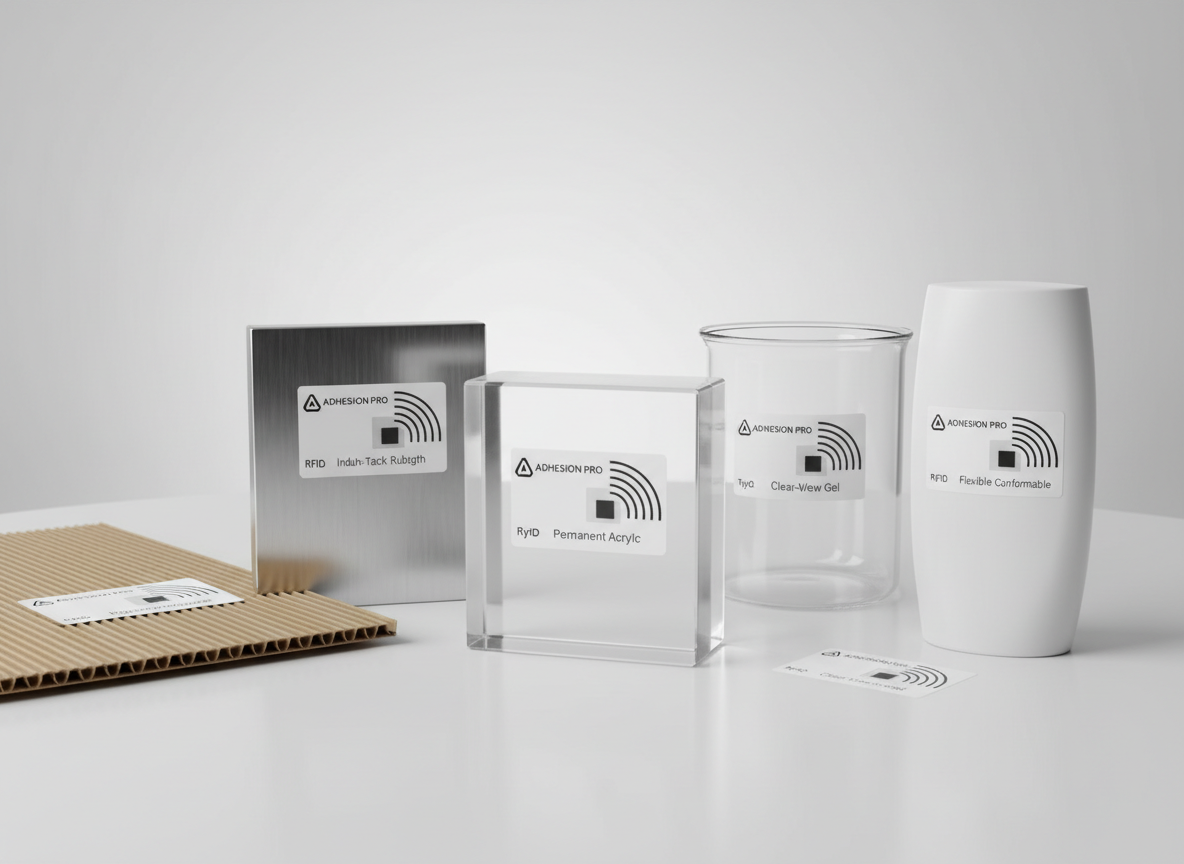
Standard high-tack adhesive for most applications. Creates a strong, lasting bond.
Designed to be removed without leaving residue or damaging surfaces.
Maintains bond strength in cold storage and freezer environments.
Extra-aggressive adhesive for rough, textured, or difficult surfaces.
| Surface | Recommended Adhesive |
|---|---|
| Smooth plastic (PP, PE, PET) | Permanent or Removable |
| Cardboard / Corrugated | High-Tack Permanent |
| Metal (smooth) | Permanent |
| Metal (powder-coated/textured) | High-Tack Permanent |
| Glass | Permanent or Removable |
| Wood (sealed) | Permanent |
| Wood (rough/unfinished) | High-Tack Permanent |
| Frozen surfaces | Freezer-grade (apply before freezing) |
| Oily/dirty surfaces | Clean first, then Permanent |
Clean surfaces before applying labels. Remove dust, oil, moisture, and debris. Isopropyl alcohol works well for most surfaces. Let the surface dry completely before applying the label.
Apply labels at room temperature (60-80°F) when possible. Most adhesives need time to "wet out" and bond properly. Applying in extreme cold or heat can reduce bond strength. For freezer items, apply labels before the product is frozen.
Apply firm, even pressure across the entire label. Adhesive bond strength increases over 24-72 hours as the adhesive "wets out" to the surface. Avoid testing bond strength immediately after application.
For curved surfaces, use flexible label materials and consider smaller label sizes. The tighter the curve, the more stress on the adhesive. High-tack adhesives help on curves. Avoid wrapping labels around sharp edges.
For applications where labels will be exposed to heat after application (ovens, autoclaves, hot processes). Maintains bond at temperatures up to 400°F+.
Resists solvents, oils, and cleaning chemicals. Used in manufacturing, automotive, and healthcare where labels are exposed to harsh substances.
Leaves a visible "VOID" pattern or destructs when removal is attempted. Used for security seals, warranty labels, and anti-counterfeiting.
Performs across a wide temperature range (-40°F to 200°F). Good for products that move between environments (cold storage to room temp to shipping).
Causes: Dirty surface, wrong adhesive for surface type, applied in extreme temps, not enough pressure.
✓ Solution: Clean surface, use high-tack adhesive for rough surfaces, apply at room temp, press firmly.
Causes: Oil/residue on metal, powder-coated surface, curved surface.
✓ Solution: Clean with alcohol, use high-tack adhesive for textured metal, use smaller labels on curves.
Causes: Standard adhesive used, labels applied to frozen surface.
✓ Solution: Use freezer-grade adhesive, apply labels before product is frozen (at room temp).
Causes: Permanent adhesive used where removable was needed, label left on too long.
✓ Solution: Use removable adhesive for temporary applications, remove labels before adhesive fully cures.
Answer these questions to determine the right adhesive for your application:
1. What surface will the label be applied to?
Smooth plastic, metal, cardboard, glass, wood, etc.
2. Is the surface smooth or textured?
Textured/rough surfaces need high-tack adhesive.
3. What temperature range will the label experience?
Freezer, room temp, high heat, or variable?
4. Does the label need to be removed later?
If yes, use removable adhesive.
5. Will the label be exposed to chemicals, oils, or moisture?
If yes, use chemical-resistant or waterproof adhesive.
6. Is tamper-evidence required?
If yes, use tamper-evident adhesive.
Tell us about your surface and environment. We'll recommend the right adhesive and send a quote within 24 hours.
Request a Free Quote →Or call: 800-537-5310
Get the latest updates on new products and upcoming sales
Thanks for subscribing!
This email has been registered!