SUBSCRIBE TO OUR NEWSLETTER
Get the latest updates on new products and upcoming sales
USA Support
Choose the right material for your environment. Paper, synthetic, high-temp, and specialty options explained.
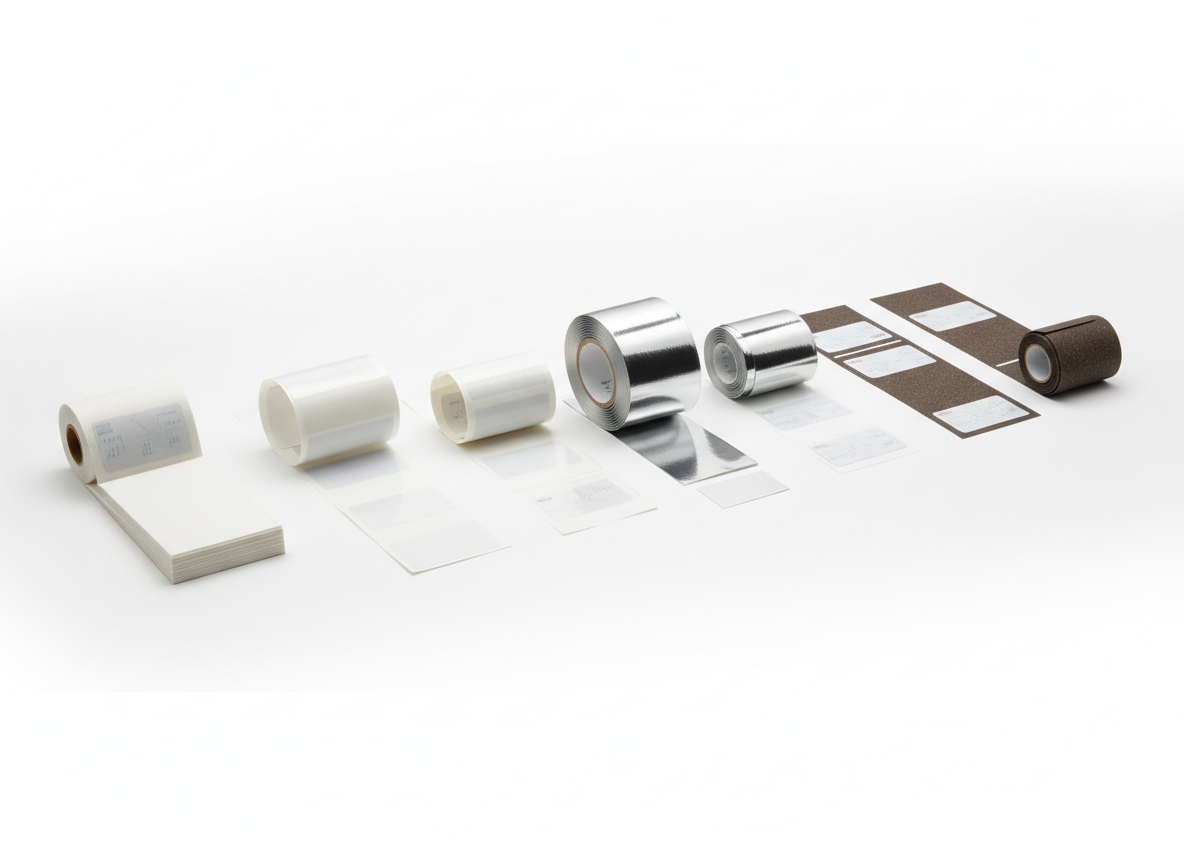
Cost-effective option for indoor, short-term, and controlled environments.
Durable synthetic material with good moisture and chemical resistance.
Premium synthetic with excellent durability, chemical, and heat resistance.
Specialty materials rated for extreme heat applications.
| Environment | Recommended Material |
|---|---|
| Indoor / Climate-controlled | Paper, Polypropylene |
| Warehouse / Light industrial | Polypropylene, Polyester |
| Outdoor / UV exposure | Polyester with UV coating |
| Cold storage / Freezer | Freezer-grade PP or PET |
| High heat (200-300°F) | Polyester |
| Extreme heat (300-500°F) | High-temp specialty |
| Chemical exposure | Polyester, specialty coatings |
| Metal surfaces | On-metal labels (any material) |
Standard RFID labels don't work well on metal surfaces—the metal interferes with the RF signal. On-metal labels use a spacer layer that allows the antenna to function properly. Available in paper, PP, and polyester versions.
Standard adhesives fail in freezer environments. Freezer-grade labels use special adhesives that maintain bond strength at temperatures as low as -40°F. The label material (PP or PET) must also be rated for cold.
For outdoor applications, use polyester with UV-resistant coatings and inks. Standard materials will fade, crack, or degrade within months of sun exposure. UV-rated labels can last years outdoors.
Will labels be exposed to moisture, heat, chemicals, or UV light? Indoor climate-controlled environments can use paper; harsh conditions need synthetics.
Short-term tracking (days/weeks) can use paper. Long-term asset tracking (years) needs polyester or specialty materials.
Metal surfaces require on-metal labels. Curved surfaces need flexible materials. Rough surfaces need aggressive adhesives.
Paper is cheapest but least durable. Polyester costs more but lasts longer. Choose based on your application's true requirements.
| Material | Indoor Lifespan | Outdoor Lifespan |
|---|---|---|
| Paper | 6 months - 2 years | Not recommended |
| Polypropylene | 2 - 5 years | 1 - 2 years |
| Polyester | 5 - 10+ years | 3 - 5 years |
| High-Temperature | 5 - 10+ years | 3 - 5 years |
*Lifespan varies based on specific conditions. Contact us for recommendations for your application.
Tell us about your environment and application. We'll recommend the right material and send a quote within 24 hours.
Request a Free Quote →Or call: 800-537-5310
Get the latest updates on new products and upcoming sales
Thanks for subscribing!
This email has been registered!